AURA
Arctic Urban Risks and Adaptations
The NSF-NNA sponsored activity focused on developing a co-production framework for addressing multiple changing environmental hazards.
Climate change is increasing the vulnerability of arctic urban communities to natural hazards such as unstable permafrost, wildfire, and rain-in-winter events. The Arctic Urban Risks and Adaptations (AURA) project undertakes a spatially explicit assessment of the three natural hazards as they have evolved simultaneously in the Municipality of Anchorage and the Fairbanks North Star Borough, Alaska, and Whitehorse, Yukon, Canada over the past several decades, and how they might change over the next 40 years.
Our interdisciplinary research team of economists, permafrost, fire, weather/climate, environmental scientists, and policy experts will conduct transdisciplinary research on arctic natural hazards and their impacts on the natural and built environments and society. The research team will work closely with local governments and non-governmental organizations (NGOs), Indigenous groups, insurance companies, and residents to co-produce knowledge on the costs, risks and actions taken to mitigate and adapt to these hazards.

Wildfire Hazard Maps
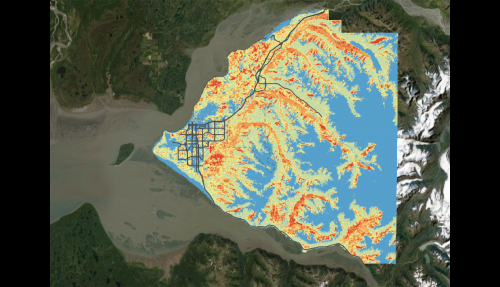
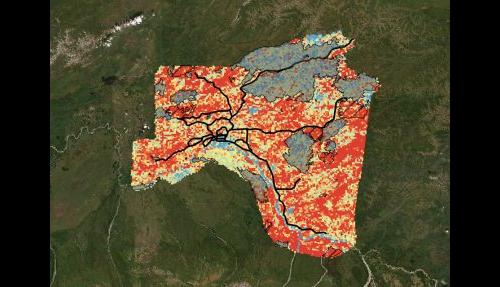
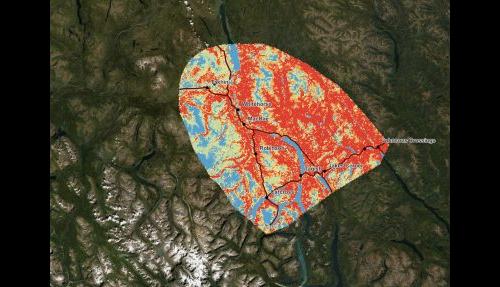
Residents in Anchorage, Fairbanks and Whitehorse, Yukon can explore wildfire hazards in their communities using these maps developed by the AURA project. The maps illustrate the potential for wildfire risk based on the ability of vegetation to carry a fire and throw embers. The underlying vegetation is from Landsat imagery (30m) from the NASA ABoVE program.
For more information about these maps and additional technical documents, visit this Wildfire Exposure site created by AURA researcher Jen Schmidt.
Advancing Wildfire Preparedness and Planning in Anchorage Wildfire Exposure and Egress Study
Please see the 2023 statewide wildfire exposure maps to see where your community ranks.